Introduction to field archery
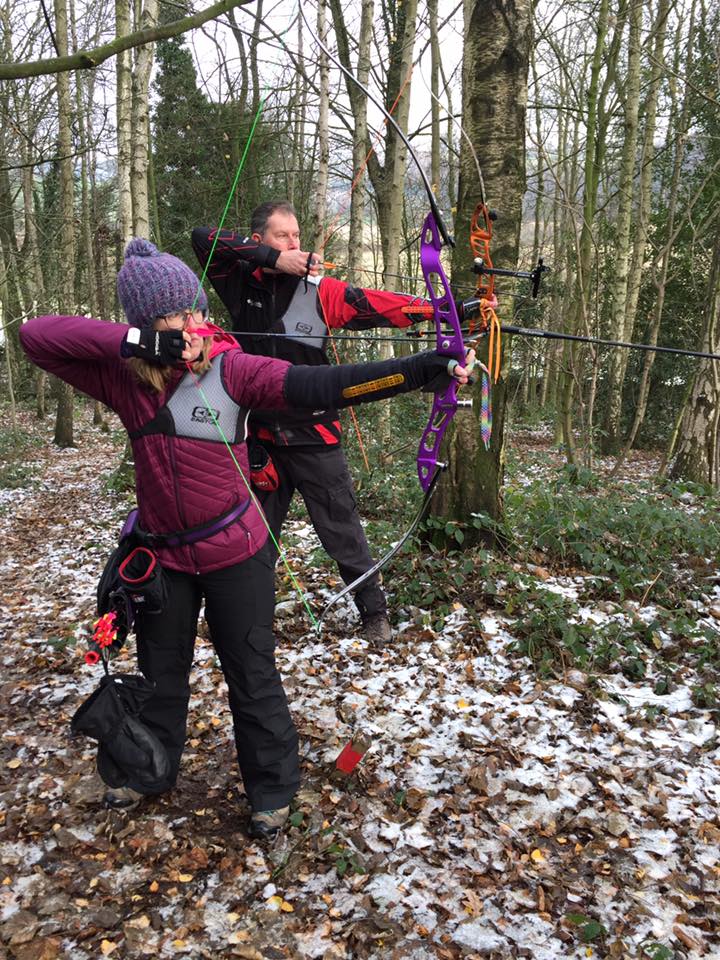
Field archery consists of a series of targets set out over natural terrain, which may include woodland, slopes, open ground or water features. Archers progress around the course in small groups, shooting each target in sequence until the course is completed. A round typically takes most of the day, with breaks taken along the way.
The structure of competitions and the rules of shooting vary depending on the governing body under which the shoot is held. Targets may include roundels, paper faces depicting animals, or three-dimensional foam animal targets, each with designated scoring areas and either marked or unmarked shooting distances.
The bows we shoot
In field archery there are classes for a range of different bow types, which vary slightly depending on the society or association’s rules of shooting. At Ballands Bowmen, members shoot competitively using longbow, barebow, recurve (or freestyle) and compound bows.
Beginner archers are taught to shoot barebow, and once this technique has been learned, they may go on to try other bow types. In the image shown, Chris is shooting a recurve (or freestyle) bow, complete with sight, stabilisation and a clicker to aid consistent draw. Sarah is shooting barebow — a bow of similar construction but without these additional shooting aids.
Arrows may be made of wood, aluminium, carbon, or a combination of carbon and aluminium. They are available in a range of spines (thicknesses) and are carefully selected to suit the type of bow, the archer’s draw length, and the draw weight or poundage of the bow.